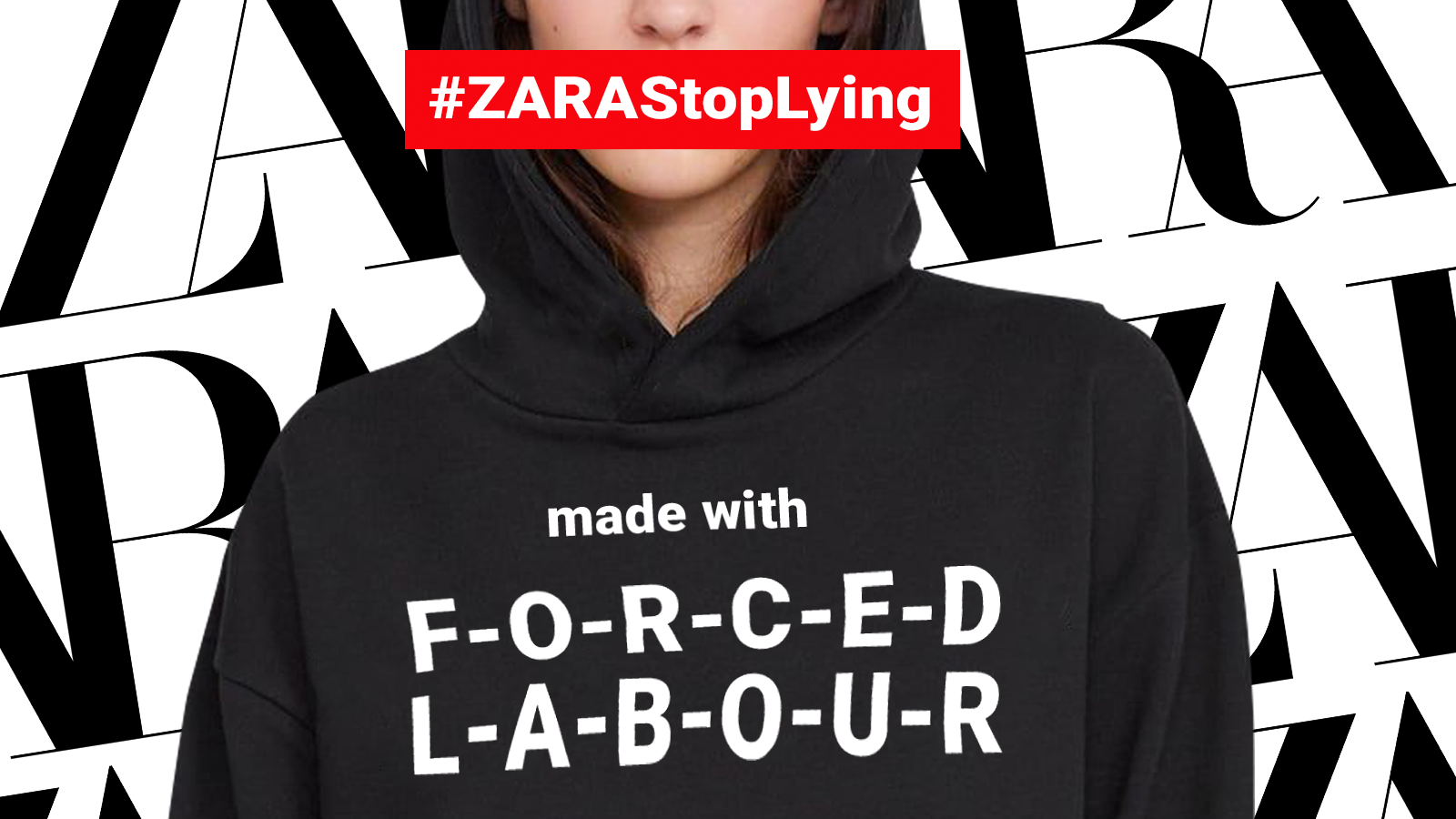
We’re mobilizing pressure at every level needed to change corporate behaviour and strengthen government action.
We’re mobilizing pressure at every level needed to change corporate behaviour and strengthen government action.
HOW OUR CAMPAIGNS CREATE CHANGE
PUBLIC AWARENESS:
We shape the public narrative around Uyghur forced labour by exposing supply chain links, amplifying investigations and survivor testimonies, countering misinformation, and mobilising supporters. We make sure the world knows what’s happening in the Uyghur Region – and why it matters.
CORPORATE ACCOUNTABILITY:
We use strategic campaigning, consumer action, investor pressure, and private advocacy to force companies to investigate their supply chains, address exposure to Uyghur forced labour, and fully exit the Uyghur Region.
GOVERNMENT ACTION:
We advocate for stronger forced labour import bans, more effective enforcement, and mandatory human rights due diligence so that there is NO market for Uyghur forced labour anywhere in the world.
TARGET SECTORS
FASHION: The fashion industry is heavily exposed to Uyghur forced labour through cotton, yarn and textile manufacturing and production. In 2022, the Uyghur Region produced 23% of the world's cotton and 90% of China's cotton, and many international fashion brands continue to operate stores in the region today. Learn more.
AUTO: Gas-powered and electric vehicles rely on supply chains for aluminium, steel, batteries, and electronic components. More than 100 automotive manufacturers and suppliers are exposed to Uyghur forced labour. Learn more >
TECH: From smartphones and laptops to semiconductors, touchscreens, and printed circuit boards, technology supply chains are at high risk of Uyghur forced labour. The Uyghur Region produces around 35% of the world's polysilicon, while supply chains for many of the world's largest technology companies have been linked to Uyghur forced labour. Learn more.
FOOD: Seafood, poultry, tomatoes, peppers, spices, cottonseed, and other agricultural products linked to the Uyghur Region continue to enter global supply chains. Thousands of Uyghur workers have been transferred to seafood and poultry processing plants across China, and the Uyghur Region produces most of China's tomatoes. Learn more.
OTHER – Additional exposure has been documented in solar energy, critical minerals, industrial manufacturing, cosmetics, and more. Learn more.
TARGET COMPANIES
We’re focusing on a small number of strategic companies to maximize impact across sectors.







HOW WE CHOOSE OUR TARGETS
We focus on companies where strategic pressure can drive change across industries and support stronger government action.
Our campaigns prioritise companies that are:
Consumer-facing and highly visible
Operate in sectors with documented forced labour risks
Supported by strong, recent public evidence
Sensitive to reputational pressure
Headquartered in countries where import ban legislation exists – or is emerging
See how our past campaigns have helped raise awareness, strengthen corporate accountability, and support policy change.
TAKE ACTION
Every action builds pressure. Join our movement!
Spread the facts
Demand answers from brands
Push for bans on importing forced-labour goods